The Melting Arctic Dress
Penny Smith
Scoil Dara
Kildare County Council
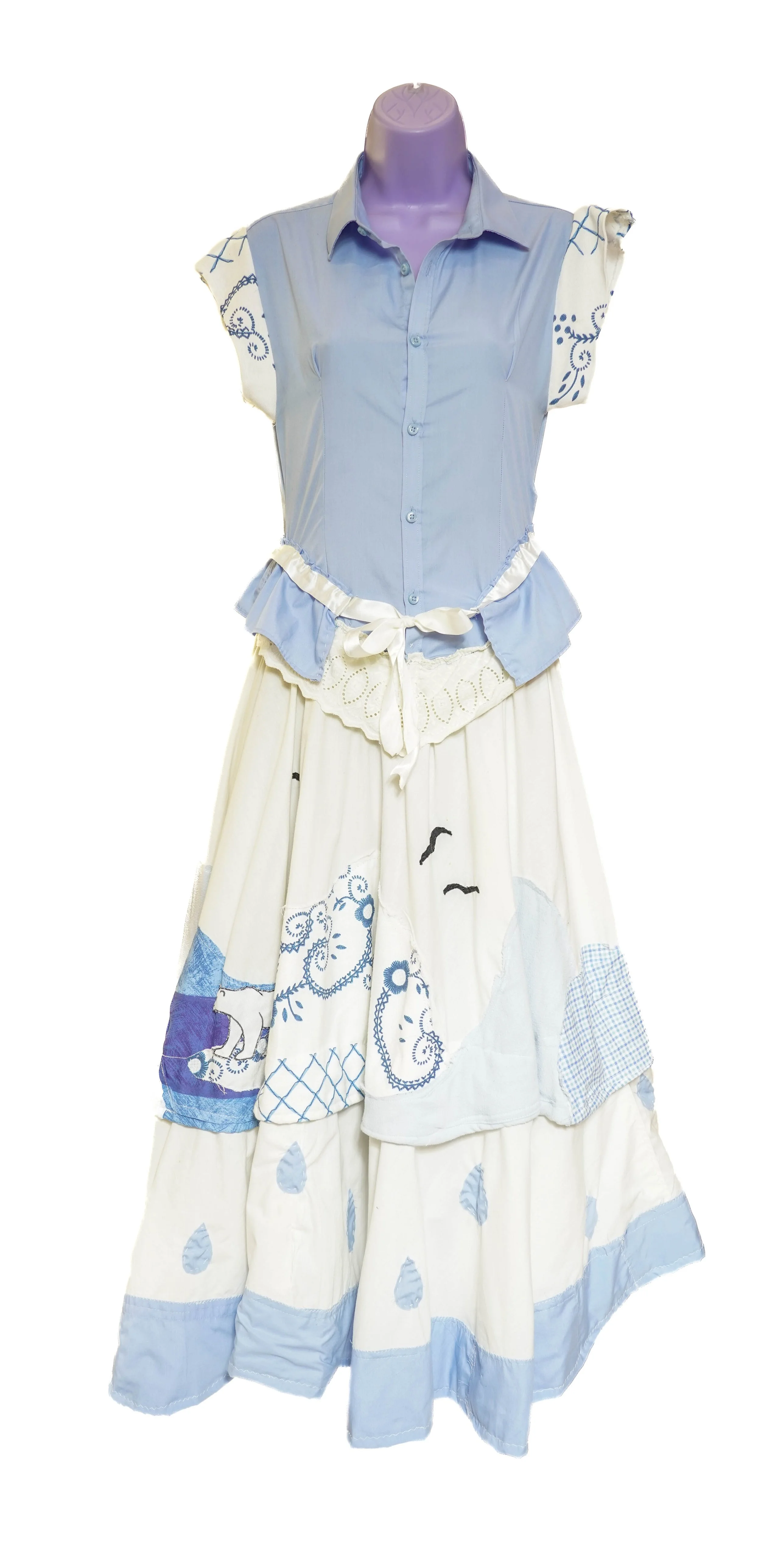
This outfit was created purely from items from Penney’s own home including, old bedsheets, her brother’s old school shirts, her old pyjamas, old t-shirts, an old table cloth from Portugal, curtain fabric samples and other scrap fabrics from previous projects.
-
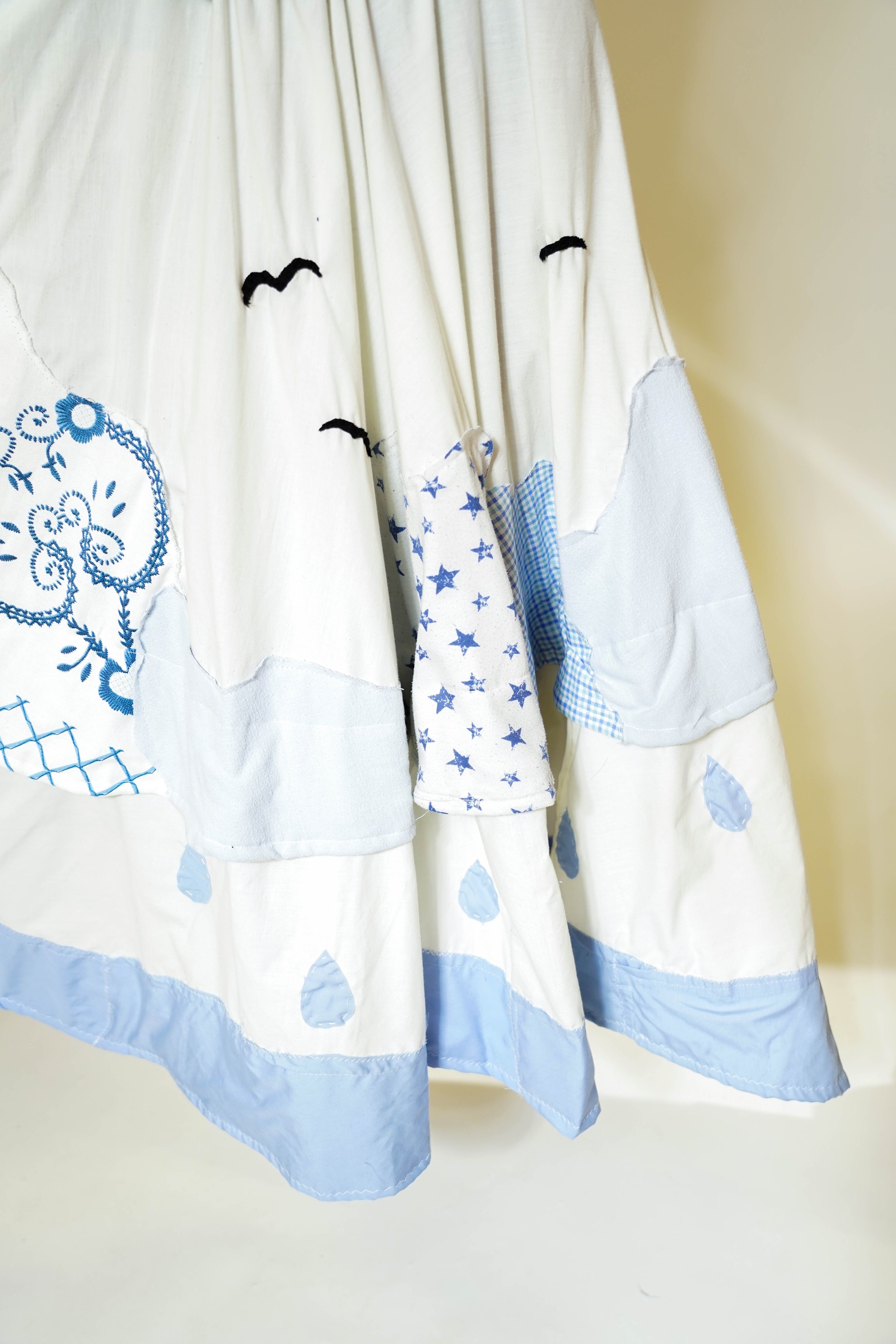
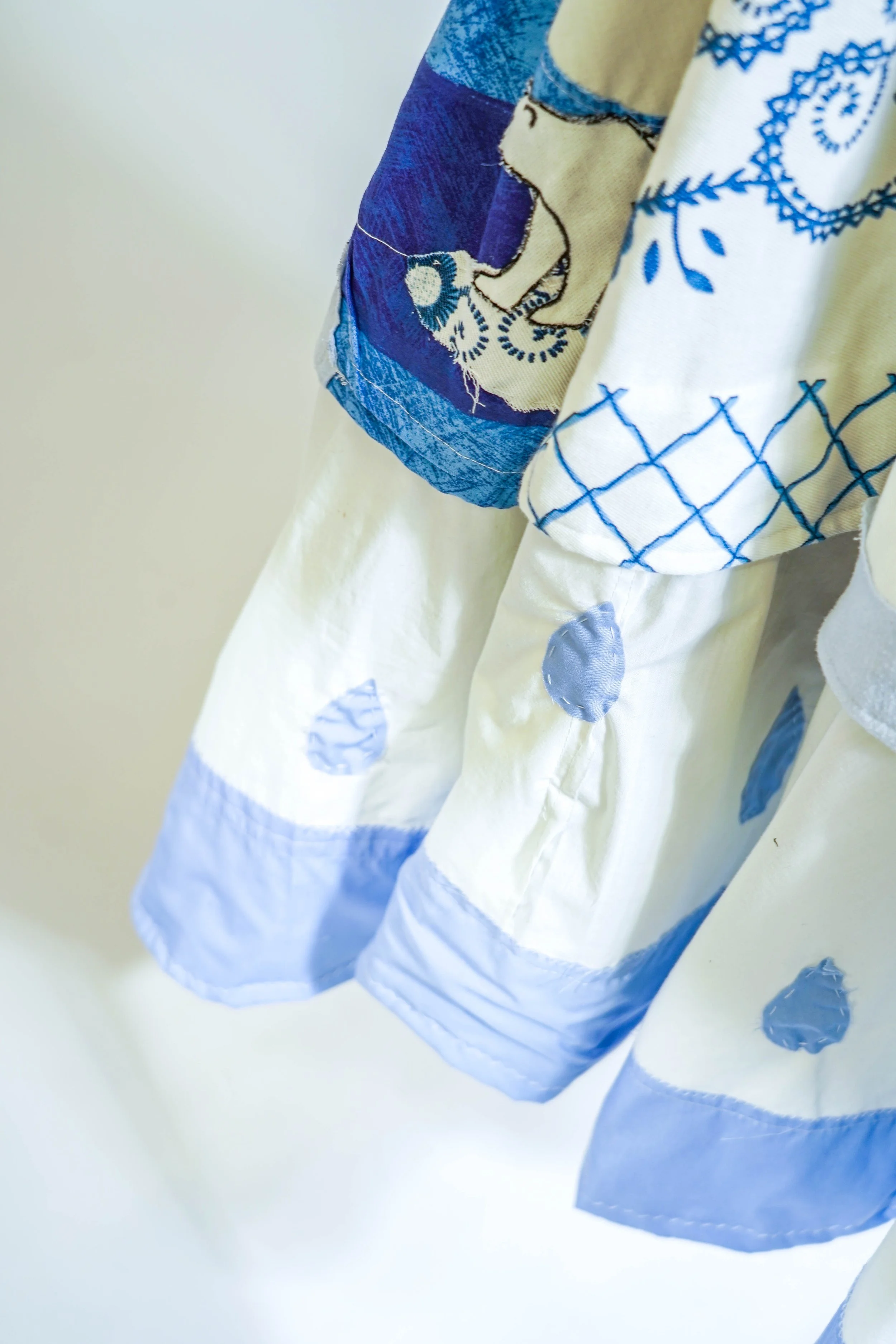
Inspired by her love of historical fashion as well as a desire to represent the effects of climate change on the arctic, Penney chose a blue and white palette with a mixture of different textures and movement including the angular sleeves representing the ice of the arctic and the flowing skirt representing the movement of the currents of the sea.
The tight bodice and large skirt is inspired by the silhouette of period high society dresses.
-
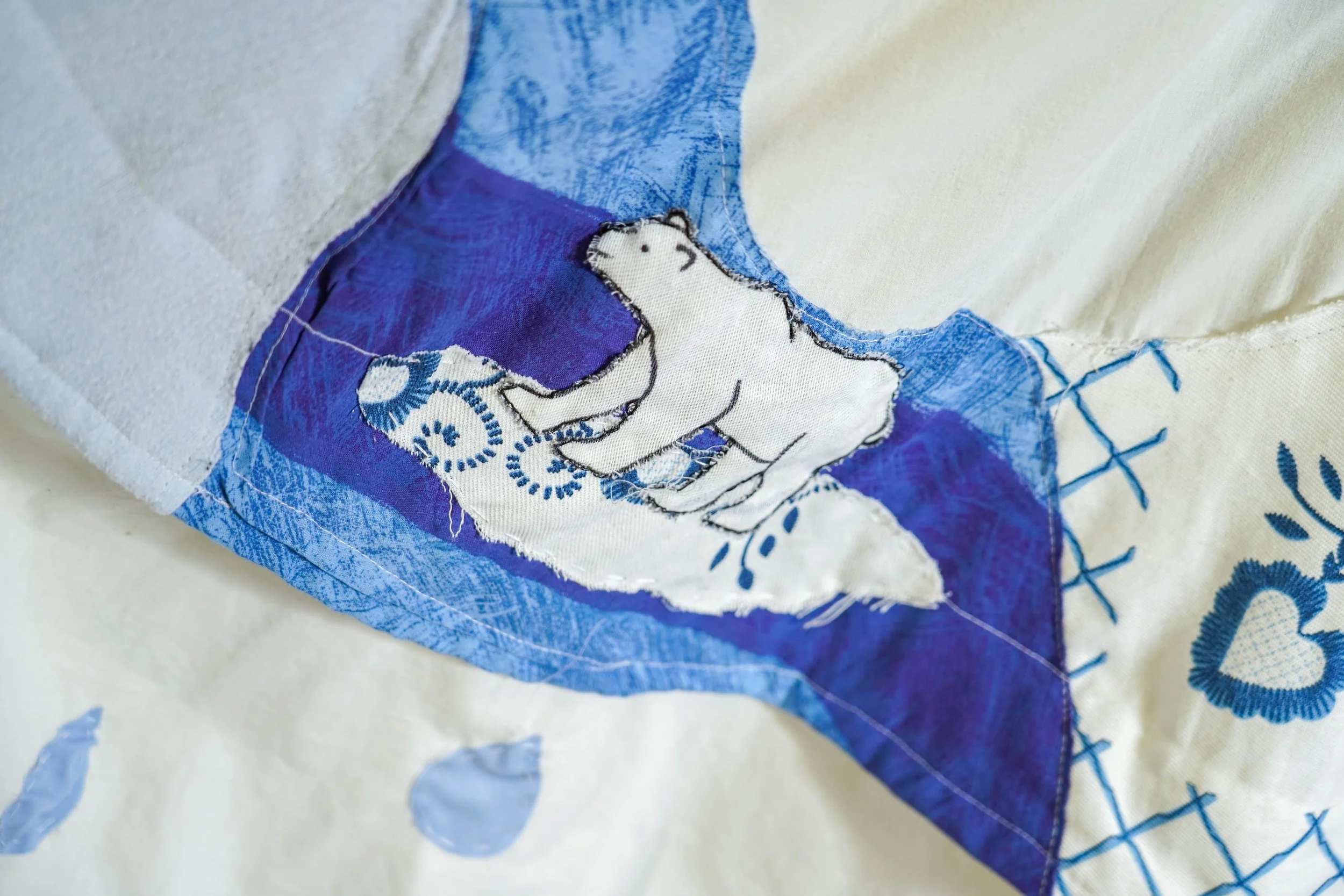
Penney cut the circle skirt of the dress from an old bedsheet, before hemming it she appliqued different scrap fabrics onto the bottom to represent icecaps. She altered one of her brother’s old school shirts to fit her and removed the sleeves, replacing them with angular capped sleeves made from an old table cloth.
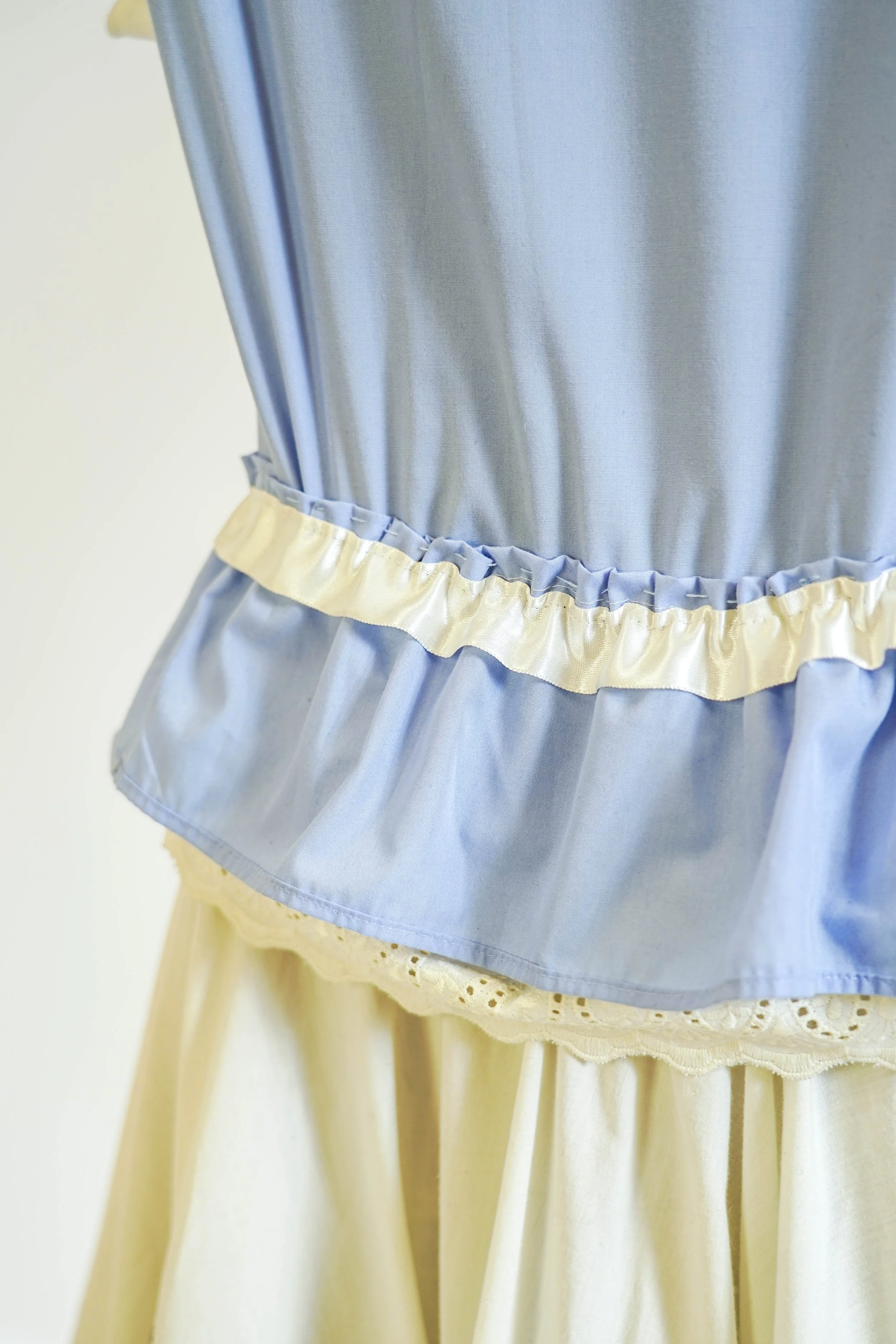
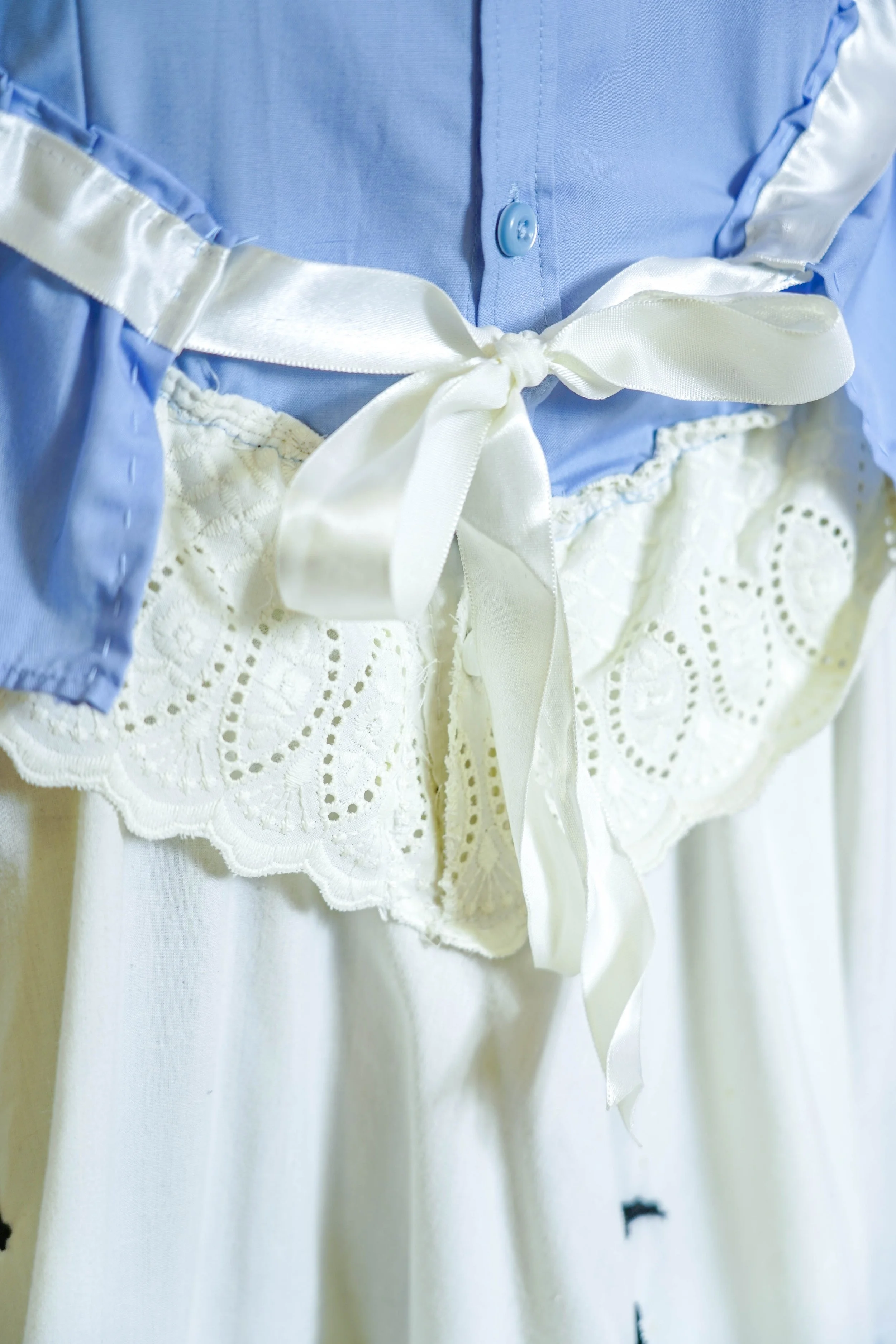
She sewed the shirt to the skirt and overcame a size issue she had with the waist of the skirt by cutting a slit down the front, continuing the opening of the shirt by sewing a facing on and creating a button hole. She attached a lace frill to the bottom of the shirt and a second frill made from the shirt creating an angular design feature echoing the silhouetted of the sleeves and finishing it off with ribbon harvested from pyjama packaging which ties in a bow at the front.
Penny created a second layer to add to the bottom of her skirt to achieve her desired length from a second white bed sheet and created a blued band at the bottom by piecing together another of her brother’s old school shirts.
The last touch was to applique the waterdrops on the bottom layer of the skirt, the polar bear on to one of the ice caps and embroidered birds.
-
Penny researched the production of polyester highlighting the amount of energy needed for the manufacturing process, often sourced from non-renewable energy sources further contributing to carbon emissions.